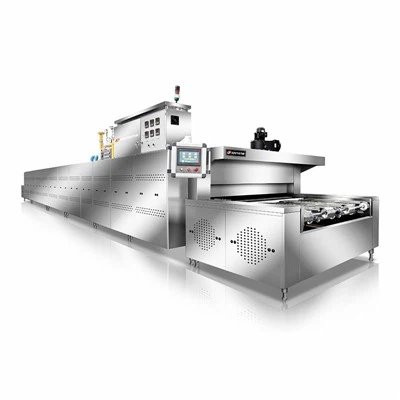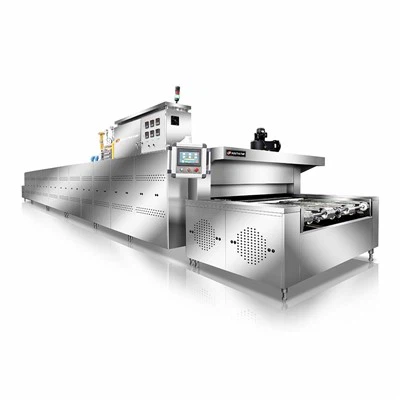


Hey there, fellow bakers and baking enthusiasts! As a supplier of rack ovens, I get asked a ton of questions about these amazing pieces of equipment. One of the most common questions I hear is, "Does a rack oven produce even baking results?" Well, let's dive right into it and find out.
First off, let me give you a quick rundown of what a rack oven is. A rack oven is a large, commercial - style oven that uses a rotating rack system. This design allows multiple trays of baked goods to be cooked simultaneously. The rotation of the rack is a key feature that's supposed to contribute to even baking.
The concept behind the rotating rack is pretty simple. As the rack turns, each tray of baked goods moves through different parts of the oven chamber. This means that every tray gets exposed to the heat source from various angles. In theory, this should eliminate hot spots and cold spots within the oven, resulting in more consistent baking across all the trays.
Now, let's talk about the science of baking. When you're baking, heat transfer is crucial. There are three main types of heat transfer: conduction, convection, and radiation. In a rack oven, all three play a role.


Conduction occurs when the heat from the oven's walls and the baking trays directly touches the dough or batter. The metal trays conduct heat to the food, helping it to cook from the bottom up. Convection is the movement of hot air within the oven. In a rack oven, the rotating rack helps to circulate the hot air more evenly. As the rack turns, it stirs up the air, ensuring that all parts of the oven get a good flow of heated air. Radiation is the transfer of heat through electromagnetic waves. The heating elements in the oven emit these waves, which directly heat the food.
One of the factors that can affect the evenness of baking in a rack oven is the type of heating system it has. There are two main types: gas - fired and electric. Gas - fired rack ovens typically have a more intense and direct heat source. The flames from the gas burners can create a very hot environment, but they can also be a bit tricky to control. If the burners aren't adjusted properly, you might end up with uneven heating.
On the other hand, electric rack ovens offer more precise temperature control. They usually have heating elements that can be set to a specific temperature. This makes it easier to maintain a consistent heat throughout the baking process. However, electric ovens might take a bit longer to heat up compared to gas - fired ones.
Another important aspect is the size and capacity of the rack oven. If you overload the oven with too many trays, it can disrupt the air circulation. The rotating rack might not be able to turn smoothly, and the hot air won't be able to move around as freely. This can lead to uneven baking, with the center trays getting less heat than the outer ones. So, it's important to follow the manufacturer's guidelines on how many trays you can safely use at once.
Now, let's talk about some of the features that can enhance the even baking capabilities of a rack oven. Many modern rack ovens come with features like adjustable rack speeds. You can set the rack to rotate at different speeds depending on what you're baking. For example, if you're baking delicate pastries, you might want a slower rotation speed to prevent them from getting jostled around too much.
Some rack ovens also have multiple heating zones. This means that different parts of the oven can be set to different temperatures. For instance, you can have the top part of the oven a bit cooler if you're worried about the tops of your baked goods burning, while the bottom part can be hotter to ensure proper browning on the bottom.
I've been in the business of supplying rack ovens for a while now, and I've seen firsthand the difference that a good quality rack oven can make. Take our Manual Control Rotary Rack Oven for example. It's designed with precision in mind. The manual control allows you to fine - tune the rotation speed, temperature, and baking time. This gives you complete control over the baking process, ensuring that you get even and consistent results every time.
But a rack oven isn't the only piece of equipment you need in a commercial bakery. If you're making bread or other dough - based products, a Commercial Dough Divider Rounder is a must - have. It helps you to portion your dough accurately, so that all your loaves or pastries are the same size. This consistency in size is important for even baking, as each piece will cook at the same rate.
And if you're looking for more versatility in your baking, a Combination Convection Oven can be a great addition. It combines the features of a convection oven with other functions, like steam injection. This can be useful for baking bread, as the steam helps to create a crispy crust while keeping the inside moist.
In conclusion, a well - designed and properly maintained rack oven can definitely produce even baking results. The rotating rack, along with the various heat transfer methods, works together to ensure that your baked goods are cooked evenly from top to bottom and side to side. However, it's important to choose the right oven for your needs, follow the operating instructions, and not overload it.
If you're in the market for a rack oven or any other baking equipment, I'd love to have a chat with you. Whether you're a small - scale bakery just starting out or a large - scale commercial operation, I can help you find the perfect equipment to meet your baking goals. So, don't hesitate to reach out and start a conversation about your baking needs.
References
- "Baking Science and Technology" by Mary Jane Dillard
- "Commercial Baking Equipment: A Guide" by John Smith