

Adjusting the baking time for different thicknesses of products in an electric tunnel oven is a crucial skill for achieving optimal baking results. As a supplier of Electric Tunnel Ovens, I've witnessed firsthand how mastering this adjustment can significantly enhance the quality of baked goods. In this blog, I'll share some insights and practical tips on how to make these adjustments effectively.


Understanding the Basics of Baking in an Electric Tunnel Oven
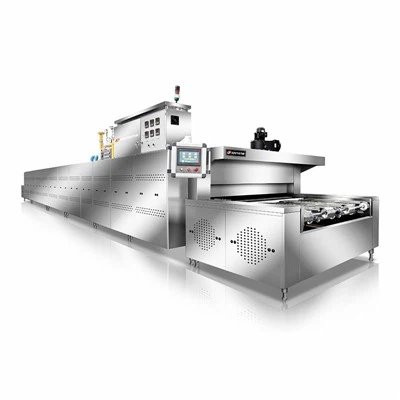
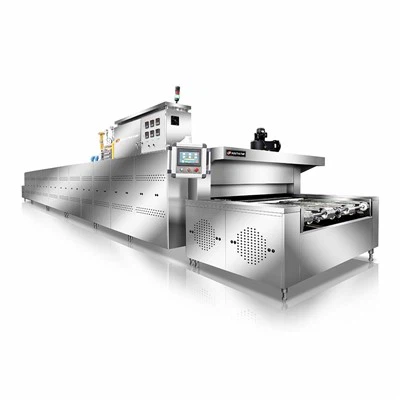
Before delving into the specifics of adjusting baking time for different product thicknesses, it's essential to understand how an electric tunnel oven works. An electric tunnel oven consists of a long, insulated chamber through which products are conveyed on a conveyor belt. The oven is equipped with heating elements that generate heat, which is then transferred to the products as they pass through the oven.
The key factors that influence the baking process in an electric tunnel oven include temperature, conveyor speed, and product thickness. Temperature determines the rate at which heat is transferred to the products, while conveyor speed affects the amount of time the products spend in the oven. Product thickness, on the other hand, plays a significant role in how quickly the products heat up and cook through.
The Impact of Product Thickness on Baking Time
Product thickness has a direct impact on the baking time required to achieve a fully cooked and evenly baked product. Thicker products take longer to heat up and cook through compared to thinner products. This is because heat needs to penetrate deeper into the product to reach the center, and the larger mass of the thicker product requires more energy to heat up.
For example, a thin slice of bread may only require a few minutes in the oven to bake, while a thick loaf of bread may take 20 minutes or more. Similarly, a thin layer of cookies may bake in 8 - 10 minutes, while a thick batch of brownies may take 20 - 25 minutes.
Calculating the Adjusted Baking Time
To calculate the adjusted baking time for different thicknesses of products, you can use the following general guidelines:
- Establish a baseline: Start by determining the baking time for a standard thickness of the product. This can be based on the recipe or your past experience. For instance, if you're baking a standard 1 - inch thick cake, and the recipe calls for a baking time of 30 minutes at 350°F (177°C), this will be your baseline.
- Determine the thickness ratio: Measure the thickness of the product you're currently baking and divide it by the thickness of the standard product. For example, if you're baking a 2 - inch thick cake, the thickness ratio is 2 (since 2 inches divided by 1 inch is 2).
- Adjust the baking time: Multiply the baseline baking time by the thickness ratio. In our example, if the baseline baking time for a 1 - inch cake is 30 minutes, and the thickness ratio for a 2 - inch cake is 2, the adjusted baking time would be 30 minutes x 2 = 60 minutes.
However, it's important to note that these are just general guidelines, and the actual baking time may vary depending on several factors, such as the density of the product, the type of oven, and the specific recipe. Therefore, it's always a good idea to start checking the product a few minutes before the estimated baking time is up and make adjustments as needed.
Factors to Consider When Adjusting Baking Time
In addition to product thickness, there are several other factors that you need to consider when adjusting the baking time:
- Product density: Dense products, such as fruitcakes or pound cakes, take longer to bake compared to lighter, airy products like sponge cakes. This is because the dense structure of the product makes it more difficult for heat to penetrate.
- Oven temperature: The temperature of the oven can also affect the baking time. Higher temperatures will generally result in a shorter baking time, but they may also cause the outside of the product to burn before the inside is fully cooked. Lower temperatures, on the other hand, will require a longer baking time but may result in a more evenly baked product.
- Conveyor speed: In an electric tunnel oven, the conveyor speed determines how long the products spend in the oven. If you need to increase the baking time, you can slow down the conveyor speed. Conversely, if you need to decrease the baking time, you can increase the conveyor speed.
Practical Tips for Adjusting Baking Time
Here are some practical tips to help you adjust the baking time for different thicknesses of products in an electric tunnel oven:
- Use a thermometer: A food thermometer is a valuable tool for determining the internal temperature of the product. This is especially important for thicker products, as it allows you to ensure that the center of the product has reached the appropriate temperature for doneness.
- Monitor the product closely: Keep a close eye on the product as it bakes. Look for signs of browning on the surface and check the texture and color of the product. You can also use a toothpick or a cake tester to check if the center of the product is cooked. If the toothpick comes out clean, the product is likely done.
- Make small adjustments: When making adjustments to the baking time, it's best to make small changes and test the results. For example, if you think the product needs a little more time in the oven, add 2 - 3 minutes and check again. This will help you avoid over - baking the product.
- Pre - heat the oven: Always pre - heat the oven to the recommended temperature before baking. This ensures that the product starts baking immediately and helps to achieve more consistent results.
The Role of Our Electric Tunnel Ovens in Baking
Our Bread Baking Tunnel Oven is designed to provide precise temperature control and even heat distribution, making it easier to adjust the baking time for different thicknesses of products. The adjustable conveyor speed allows you to customize the baking time according to the specific requirements of your products.
If you're looking for a compact solution, our Small Tunnel Oven is perfect for small - scale bakeries or test kitchens. It offers the same level of precision and performance as our larger models, but in a more space - efficient design.
For those who prefer the use of gas, our Gas Tunnel Oven provides a reliable and cost - effective option. It combines the benefits of gas heating with the advanced features of a tunnel oven, allowing you to achieve excellent baking results.
Conclusion
Adjusting the baking time for different thicknesses of products in an electric tunnel oven is a skill that can be mastered with practice and experience. By understanding the impact of product thickness on baking time, calculating the adjusted baking time, and considering other factors such as product density and oven temperature, you can achieve consistent and high - quality baking results.
If you're interested in learning more about our Electric Tunnel Ovens or have any questions about adjusting the baking time for your products, we'd love to hear from you. Contact us today to start a conversation about your specific needs and how our ovens can help you achieve your baking goals.
References
- "The Professional Baker's Handbook" by Wayne Gisslen
- "Baking Science & Technology" by Paula Figoni