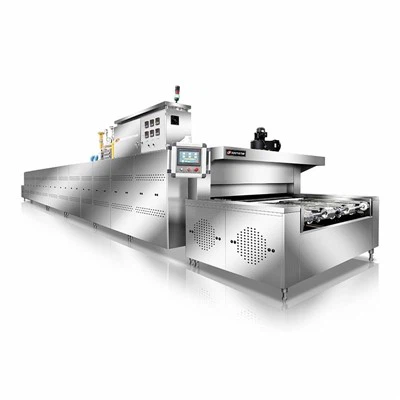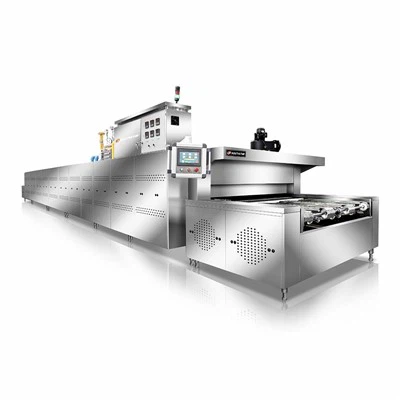


Hey there! As an electric tunnel oven supplier, I've had folks asking me about the temperature range of an electric tunnel oven a ton. So, I thought I'd spill the beans and give you all the deets.
Let's kick things off by understanding what an Electric Tunnel Oven is all about. It's a piece of equipment that's a game - changer in the food industry. You've got a conveyor belt that moves food products through a long tunnel. Inside this tunnel, heaters do their magic to cook, bake, or dry the food. And the temperature? Well, it's the key player in getting that perfect end - product.
The typical temperature range of an electric tunnel oven can be quite wide. Generally, these ovens can start from around 80°C (176°F) and go up to about 350°C (662°F). But hey, this is just a ball - park figure, and different models can have different ranges based on their design and what they're meant to do.
Lower temperature ranges
When it comes to the lower end of the temperature scale, around 80 - 120°C (176 - 248°F), these settings are great for gentle processes. For example, if you're making pastries that need a slow rise or some types of nut drying. You see, drying nuts at a low temperature helps to preserve their natural flavor and nutrients.
Another use for these lower temperatures is in food dehydration. Think about making your own dried fruits or vegetables. The slow, gentle heat helps to remove moisture without cooking the food to a pulp. We've got some customers who are into making artisanal dried products, and they rely on these lower temp settings in our Small Tunnel Oven to get the job done just right.
Middle temperature ranges
Moving up to the middle range, say around 120 - 220°C (248 - 428°F), this is where the action really starts for a lot of baking applications. If you're in the business of making bread, a temperature in this range is ideal. The dough rises, and the Maillard reaction takes place. This is what gives bread that beautiful golden - brown crust and that delicious toasty flavor.
Our Bread Baking Tunnel Oven is designed to work super well in this temperature zone. It creates a consistent environment that ensures every loaf of bread comes out perfect, whether you're making small batches or industrial - scale amounts. This middle range is also great for roasting certain meats in a food production setting. The slow roasting helps to lock in the juices and gives the meat a lovely texture.
Higher temperature ranges
At the higher end of the temperature spectrum, 220 - 350°C (428 - 662°F), these temperatures are reserved for more intense cooking processes. For instance, if you're making pizza, a high - temperature bake is essential. It gives the crust that nice, crispy texture while melting the cheese to perfection.
In some industrial food production lines, high temperatures are used for flash - baking or quick - setting processes. This is important when you need to produce a large quantity of food in a short amount of time. But it's not all about speed. The high heat can also help in caramelizing sugars on the surface of the food, adding an extra layer of flavor.
Now, you might be wondering how we control these temperatures in our electric tunnel ovens. Well, we use state - of - the - art temperature control systems. These systems are super accurate, and they allow you to set and maintain the exact temperature you need for your specific food product. You can also program different temperature profiles for different stages of the cooking process. This means that you can adjust the temperature as the food moves through the tunnel, giving you the ultimate control over the final outcome.
Another factor that affects the temperature range is the type of food you're cooking. Different foods have different optimal temperature ranges. For example, delicate pastries need a lower temperature compared to dense, hearty bread. That's why we've designed our ovens to be versatile. Whether you're a small bakery or a large - scale food manufacturer, our electric tunnel ovens can be customized to meet your specific temperature requirements.
We also understand that energy efficiency is a big deal these days. That's why our ovens are designed to use energy as efficiently as possible while maintaining the desired temperature range. We've incorporated the latest insulation materials and heating technologies to reduce energy waste. This not only saves you money but also helps to make your production process more environmentally friendly.
If you're thinking about getting an electric tunnel oven for your business, you need to consider a few things. First, think about the types of food you'll be cooking. This will determine the temperature range you need. Second, consider the volume of production. If you're making a lot of food, you'll need a larger oven with a more powerful heating system. And don't forget about the space you have available. Our Small Tunnel Oven is perfect for businesses with limited space, while our larger models can handle high - volume production.
In conclusion, the temperature range of an electric tunnel oven is a crucial factor in food production. It can make or break the quality of your end - product. Whether you need a low temperature for gentle drying, a middle temperature for baking bread, or a high temperature for flash - cooking, our electric tunnel ovens have you covered.
If you're interested in learning more about our products or want to discuss your specific needs, don't hesitate to reach out to us. We're here to help you find the perfect electric tunnel oven for your business. Let's have a chat and see how we can take your food production to the next level.


References
- Food Processing Technology: Principles and Practice, Third Edition by P. J. Fellows
- Baking Science and Technology, Fourth Edition by Henry Faridi and John W. Faubion