

Hey there, baking enthusiasts and business owners! As a supplier of Electric Tunnel Oven, I've seen firsthand the importance of achieving uniform baking in electric tunnel ovens. Whether you're baking bread, pastries, or other baked goods, consistency is key to delivering high-quality products that keep your customers coming back for more. In this blog post, I'll share some tips and tricks on how to ensure uniform baking in an electric tunnel oven, based on my experience in the industry.
Understanding the Basics of Electric Tunnel Ovens
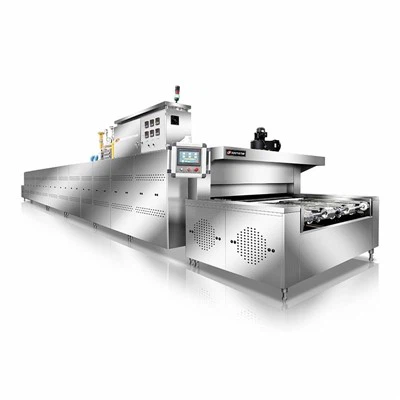
Before we dive into the tips, let's take a quick look at how electric tunnel ovens work. These ovens are designed to bake products continuously as they pass through a tunnel-shaped chamber. The oven is equipped with heating elements that provide a consistent source of heat, and a conveyor belt that moves the products through the oven at a set speed. The temperature and humidity inside the oven can be controlled to ensure optimal baking conditions.
One of the key advantages of electric tunnel ovens is their ability to provide a uniform baking environment. Unlike traditional ovens, which may have hot spots or uneven heating, electric tunnel ovens are designed to distribute heat evenly throughout the chamber. This helps to ensure that all products are baked to the same level of doneness, regardless of their position in the oven.
Tips for Ensuring Uniform Baking
Now that we understand how electric tunnel ovens work, let's take a look at some tips for ensuring uniform baking:
1. Preheat the Oven Properly
Preheating the oven is an important step in ensuring uniform baking. It allows the oven to reach the desired temperature and stabilize before the products are placed inside. This helps to prevent uneven baking and ensures that all products are baked to the same level of doneness.
To preheat the oven properly, set the temperature to the desired level and allow the oven to heat up for at least 15-20 minutes. You can use an oven thermometer to check the temperature and make sure it's accurate. Once the oven has reached the desired temperature, you're ready to start baking.
2. Use the Right Conveyor Speed
The conveyor speed is another important factor that affects uniform baking. If the conveyor speed is too fast, the products may not have enough time to bake properly, resulting in undercooked or unevenly baked products. On the other hand, if the conveyor speed is too slow, the products may overbake, resulting in burnt or dry products.
To determine the right conveyor speed for your products, you'll need to consider several factors, such as the type of product, the thickness of the product, and the desired level of doneness. You can start by setting the conveyor speed to a moderate level and adjusting it as needed based on the results of your test bakes.
3. Maintain Consistent Product Placement
Consistent product placement is essential for ensuring uniform baking. When placing the products on the conveyor belt, make sure they are evenly spaced and arranged in a single layer. Avoid overcrowding the conveyor belt, as this can cause the products to bake unevenly.
You can use a template or guide to help you place the products on the conveyor belt in a consistent manner. This will ensure that all products are exposed to the same amount of heat and airflow, resulting in uniform baking.
4. Monitor and Adjust the Temperature
Monitoring and adjusting the temperature is crucial for ensuring uniform baking. The temperature inside the oven can fluctuate due to a variety of factors, such as the number of products being baked, the type of product, and the ambient temperature.
To monitor the temperature, you can use an oven thermometer or a temperature probe. Check the temperature regularly throughout the baking process and make adjustments as needed to ensure that the temperature remains consistent. You can also adjust the temperature based on the type of product you're baking. For example, bread may require a higher temperature than pastries.
5. Control the Humidity
Humidity can also affect uniform baking. High humidity can cause the products to bake more slowly and may result in a softer crust, while low humidity can cause the products to dry out and may result in a harder crust.
To control the humidity inside the oven, you can use a humidifier or a dehumidifier. You can also adjust the humidity based on the type of product you're baking. For example, bread may require a higher humidity than pastries.
6. Clean the Oven Regularly
Cleaning the oven regularly is important for maintaining optimal baking conditions and ensuring uniform baking. Over time, food particles and debris can accumulate inside the oven, which can affect the airflow and temperature distribution.
To clean the oven, you can use a food-safe cleaner and a soft brush or cloth. Make sure to clean all surfaces of the oven, including the heating elements, the conveyor belt, and the walls. You should also clean the oven vents to ensure proper airflow.
7. Perform Regular Maintenance
In addition to cleaning the oven regularly, it's also important to perform regular maintenance on the oven. This includes checking the heating elements, the conveyor belt, and the control system to ensure they are functioning properly.
You should also have the oven serviced by a professional technician at least once a year. This will help to identify and address any potential issues before they become major problems.
Choosing the Right Electric Tunnel Oven
In addition to following the tips above, choosing the right electric tunnel oven is also important for ensuring uniform baking. When selecting an oven, you'll need to consider several factors, such as the size of your operation, the type of products you'll be baking, and your budget.
At our company, we offer a wide range of Electric Tunnel Ovens to meet the needs of different bakery businesses. Our ovens are designed with advanced features and technologies to ensure uniform baking and optimal performance. We also offer Bread Baking Tunnel Ovens specifically tailored for baking bread, as well as Gas Tunnel Ovens for those who prefer gas heating.


Conclusion
Ensuring uniform baking in an electric tunnel oven is essential for delivering high-quality baked goods that meet the expectations of your customers. By following the tips and tricks outlined in this blog post, you can achieve consistent results and take your bakery business to the next level.
If you're interested in learning more about our Electric Tunnel Ovens or other baking equipment, please don't hesitate to contact us for a consultation. We'd be happy to help you find the right solution for your bakery business.
References
- "Baking Technology: An Introduction." Wiley-Blackwell, 2012.
- "Industrial Baking Processes." Woodhead Publishing, 2013.
- "The Art and Science of Baking." John Wiley & Sons, 2017.