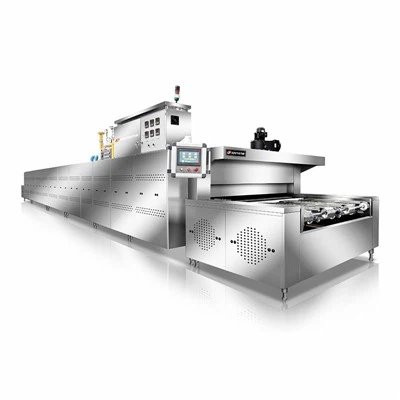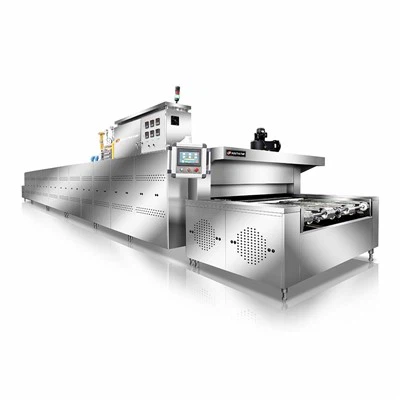


As a supplier of Gas Tunnel Ovens, I've witnessed firsthand the critical role that oven structure plays in determining the efficiency and effectiveness of heat transfer within these industrial baking marvels. Gas tunnel ovens are widely used in the food industry, especially for baking bread and other baked goods. Understanding how the oven structure impacts heat transfer is essential for optimizing baking processes, improving product quality, and reducing energy consumption.
The Basics of Heat Transfer in Gas Tunnel Ovens
Before delving into the impact of oven structure, it's important to understand the three primary modes of heat transfer in gas tunnel ovens: conduction, convection, and radiation.
Conduction is the transfer of heat through direct contact between two objects. In a gas tunnel oven, conduction occurs when the hot oven walls or baking trays come into contact with the dough or baked goods, transferring heat directly to the product.
Convection is the transfer of heat through the movement of a fluid, such as air or gas. In a gas tunnel oven, convection is the dominant mode of heat transfer. Hot air or combustion gases are circulated within the oven chamber, carrying heat to the dough or baked goods. The movement of the fluid helps to distribute heat evenly and accelerate the baking process.
Radiation is the transfer of heat through electromagnetic waves. In a gas tunnel oven, radiation occurs when the hot oven walls or heating elements emit infrared radiation, which is absorbed by the dough or baked goods. Radiation can penetrate the product and heat it from the inside out, which is particularly important for achieving a uniform bake.
Impact of Oven Structure on Conduction
The oven structure can have a significant impact on conduction heat transfer. The material and thickness of the oven walls and baking trays can affect the rate of heat transfer. For example, ovens with thicker walls or trays made of materials with low thermal conductivity will transfer heat more slowly, resulting in longer baking times and potentially uneven baking.
The design of the baking trays can also affect conduction. Trays with a smooth surface will provide better contact with the dough or baked goods, allowing for more efficient heat transfer. Additionally, trays with a large surface area will increase the contact area between the product and the tray, further enhancing conduction.
Impact of Oven Structure on Convection
The oven structure plays a crucial role in convection heat transfer. The design of the oven chamber, including its shape, size, and the arrangement of the heating elements and fans, can affect the airflow patterns within the oven. Proper airflow is essential for ensuring uniform heat distribution and efficient baking.
A well-designed oven chamber will have a smooth and streamlined shape, which helps to minimize air resistance and promote laminar airflow. Laminar airflow is characterized by smooth, parallel layers of air moving in the same direction, which allows for more efficient heat transfer. In contrast, turbulent airflow, which is characterized by chaotic and irregular air movement, can lead to uneven heat distribution and hot spots within the oven.
The arrangement of the heating elements and fans is also important for optimizing convection heat transfer. The heating elements should be positioned in such a way that they can heat the air evenly and efficiently. The fans should be sized and positioned to ensure adequate air circulation throughout the oven chamber. Additionally, the fans should be designed to create a consistent and controlled airflow pattern, which helps to prevent the formation of dead zones or areas with poor heat transfer.
Impact of Oven Structure on Radiation
The oven structure can also affect radiation heat transfer. The material and surface finish of the oven walls and heating elements can affect the amount and distribution of infrared radiation emitted. Ovens with walls and heating elements made of materials with high emissivity, such as stainless steel or ceramic, will emit more infrared radiation, which can improve the baking process.
The shape and arrangement of the heating elements can also affect radiation heat transfer. Heating elements that are arranged in a way that maximizes their surface area exposed to the product will emit more radiation and provide more even heating. Additionally, the distance between the heating elements and the product can affect the intensity of the radiation. A shorter distance will result in more intense radiation, which can lead to faster baking times.
Case Study: Impact of Oven Structure on Bread Baking
To illustrate the impact of oven structure on heat transfer, let's consider a case study of bread baking in a gas tunnel oven. In this case, we'll compare two ovens with different structures: one with a traditional rectangular chamber and one with a more advanced oval-shaped chamber.
The traditional rectangular oven has a simple design with straight walls and a flat ceiling. The heating elements are located on the sides and top of the oven, and the fans are positioned to circulate air horizontally across the oven chamber.
The advanced oval-shaped oven has a more streamlined design with curved walls and a domed ceiling. The heating elements are arranged in a circular pattern around the perimeter of the oven, and the fans are positioned to create a vertical airflow pattern.
In a side-by-side comparison, the oval-shaped oven was found to provide more uniform heat distribution and faster baking times compared to the rectangular oven. The curved walls and domed ceiling of the oval-shaped oven helped to promote laminar airflow and reduce air resistance, resulting in more efficient convection heat transfer. Additionally, the circular arrangement of the heating elements provided more even radiation heat transfer, which helped to achieve a more uniform bake.
Importance of Oven Structure for Energy Efficiency
In addition to its impact on heat transfer and baking quality, the oven structure can also have a significant impact on energy efficiency. A well-designed oven with optimized airflow and heat transfer characteristics will require less energy to achieve the same baking results compared to a poorly designed oven.
For example, ovens with a more streamlined design and better insulation will reduce heat loss and improve energy efficiency. Additionally, ovens with fans and heating elements that are sized and positioned correctly will operate more efficiently, using less energy to circulate air and heat the oven chamber.
Conclusion
In conclusion, the oven structure plays a critical role in determining the efficiency and effectiveness of heat transfer in a gas tunnel oven. By understanding the impact of oven structure on conduction, convection, and radiation heat transfer, oven manufacturers can design ovens that provide more uniform heat distribution, faster baking times, and better product quality. Additionally, optimizing the oven structure can help to improve energy efficiency and reduce operating costs.
If you're in the market for a gas tunnel oven, I encourage you to consider the oven structure and its impact on heat transfer. Our company offers a range of Gas Tunnel Ovens with advanced designs and features that are specifically engineered to optimize heat transfer and baking performance. Whether you're baking bread, pastries, or other baked goods, our ovens can help you achieve consistent, high-quality results.
For more information about our Tunnel Oven for Bread or Bread Baking Tunnel Oven, please contact us to discuss your specific requirements and explore how our ovens can meet your needs. We look forward to working with you to optimize your baking process and help you achieve your business goals.


References
- ASHRAE Handbook - Fundamentals. American Society of Heating, Refrigerating and Air-Conditioning Engineers, Inc.
- Heldman, D. R., & Lund, D. B. (2007). Handbook of Food Engineering. CRC Press.
- Singh, R. P., & Heldman, D. R. (2009). Introduction to Food Engineering. Academic Press.